Skip to content
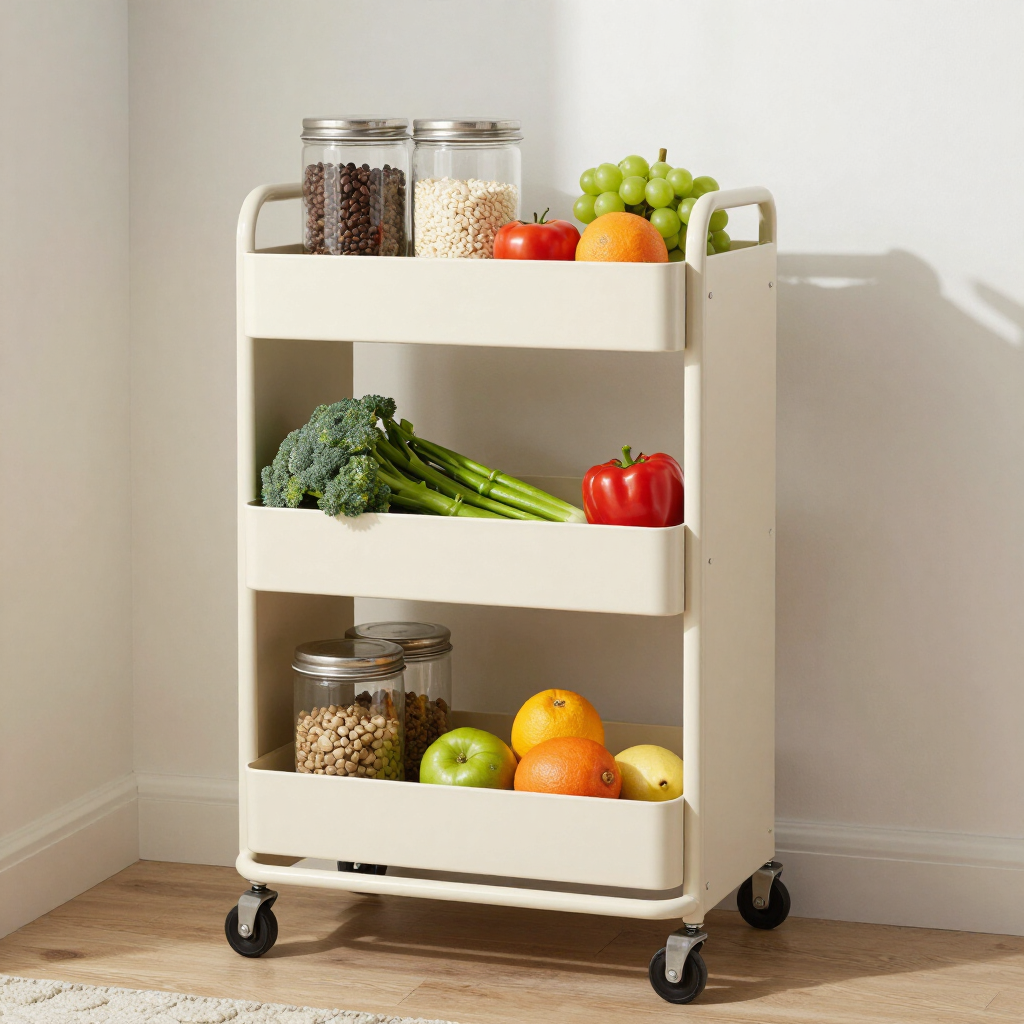
Illustrative image of a slim three-tier rolling kitchen cart.
The Journal
Storage Strategy 6 min read

One Cart, Three Kitchens

July 26, 2026

A slim rolling cart is a flexible bit of storage in a small kitchen. Here is how to turn it into a coffee bar, a pantry or a mobile prep station.

Disclosure: We may earn a commission when you buy through links on this page. It never changes what we recommend. Details

The case for a cart over a shelf

A shelf is fixed: it stores things where it stands. A rolling cart stores things and then brings them to you. In a kitchen where the counter is also the dining table and the desk, that mobility can make a cramped room more flexible. Slimness is the point: narrow enough to slide beside a fridge or stove, deep enough to hold real gear. Measure your own gap before you buy.

Configuration one: the coffee bar

Top shelf: the pour-over dripper and a mug. Middle shelf: the hand grinder and a jar of beans. Bottom shelf: a kettle and a stack of saucers. Roll it out for the morning ritual, then tuck it back into its slot. Because everything lives on the cart, the counter does not have to host a permanent coffee corner, and a tall grinder can stand on a shelf instead of the counter.

Configuration two: the rolling pantry

Load the tiers with a stackable glass storage set, with dry goods on the bottom, snacks in the middle and daily-use items on top. Square containers can tile with little wasted space, so one cart may hold more than you expect. Roll the cart to the table for serving, then back into the gap beside the fridge. Label the lids so a glance tells you what is inside.

Configuration three: the prep station

Keep the nesting mixing bowl set on the middle shelf, a cutting board on top and a knife wrapped in a cloth roll on the bottom. Pull the cart wherever you have light and space and prep there. Lock the wheels before chopping so it does not drift. When dinner is done, the station can roll away and the kitchen becomes a living space again.
Featured in this piece

The kinds of tools we mention

Disclosure: We may earn a commission when you buy through links on this page. It never changes what we recommend. Details

Illustrative image of a slim three-tier rolling kitchen cart; image source pending verification.Slim, rolling

Storage & Racks

Three-Tier Rolling Cart

A slim three-tier rolling cart: extra storage that can follow you around a galley kitchen.

Exact brand and model not yet selected — this entry describes the type of product to look for.

Why it fits & what to check

Space-saving idea

A slim cart can add several shelves in a gap beside a fridge or stove, and because it rolls it can serve as pantry storage and a movable workstation. Check its width, its depth and the gap you plan to use.

How to use it

Give each tier a job: heavier items low, appliances in the middle and daily items on top. Lock the wheels when using the top shelf for prep, and follow the manufacturer's load guidance. Wipe shelves and seams regularly.

Fit and installation notes

Measure the gap, including space for wheels and for opening any adjacent door, and check heat and clearance around a stove or fridge vents. Check the load rating, wheel locks and whether your floor is level.

Trade-offs

A rolling cart can wobble on uneven floors or when heavily loaded, and open shelves show clutter. Some assembly is typically required.

Care

Follow the manufacturer's care instructions. Keep wheels clear of debris.

Pair it with

Make it a coffee cart with the pour-over station on top. Pair it with the stackable glass storage set as a rolling pantry.

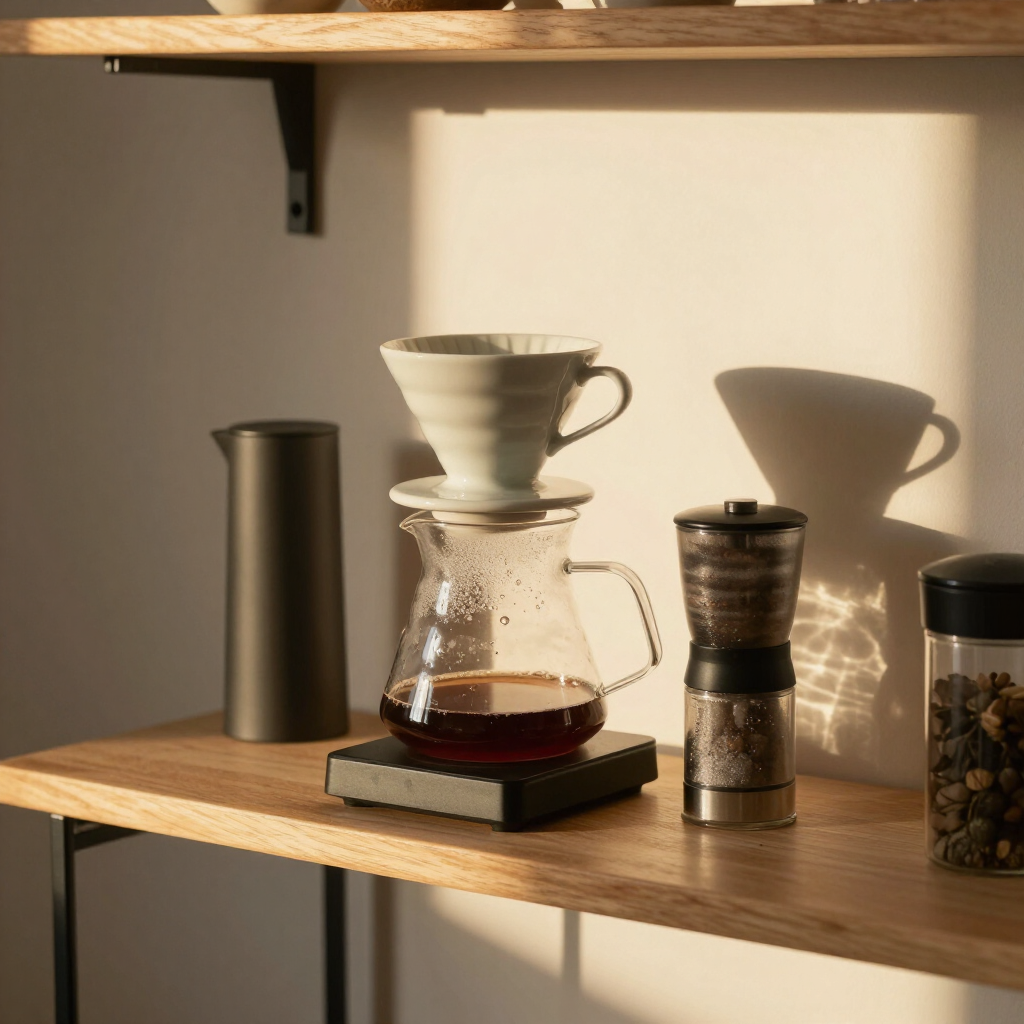
Illustrative image of a ceramic pour-over dripper and a hand grinder on a shelf; image source pending verification.Manual brewing

Coffee & Tea

Pour-Over Coffee Station

A pour-over dripper and a slim hand grinder: a small coffee corner that fits on a shelf.

Exact brand and model not yet selected — this entry describes the type of product to look for.

Why it fits & what to check

Space-saving idea

A dripper and hand grinder need no electricity for brewing and can be stored together, which suits a small kitchen with little outlet space. Many people prefer the control manual brewing offers over a capsule machine. Check the stored size of each piece against the shelf you have in mind.

How to use it

Follow the dripper and grinder manufacturers' instructions. Rinsing the paper filter first is common practice, and many brewers wet the grounds briefly before the main pour. Brewing by hand takes more attention than pressing a button.

Fit and installation notes

Check the stored size of the dripper and grinder, the height of your shelf or cart tier, and that your mugs fit under the dripper you choose.

Trade-offs

Pour-over is slower and needs more attention than a capsule or automatic machine. Hand grinding takes effort, and ceramic drippers can chip.

Care

Follow the manufacturer's care instructions. Ceramic and glass pieces are breakable; rinse coffee grounds away from the sink drain.

Pair it with

Set it on the three-tier rolling cart so beans, grinder, dripper and mugs travel together. Pair it with the under-cabinet mug rack to keep mugs within reach.

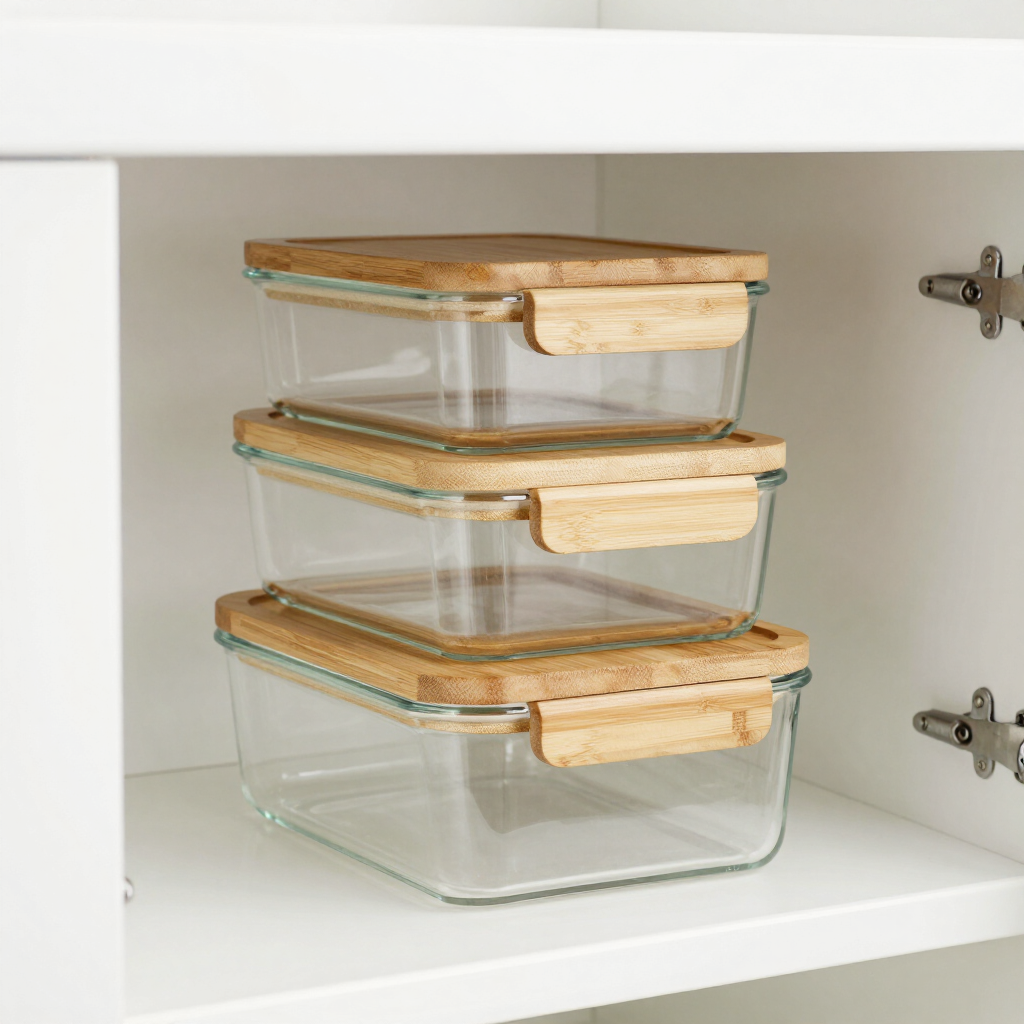
Illustrative image of stackable square glass food storage containers with lids; image source pending verification.Square, nesting

Storage & Racks

Stackable Glass Storage Set

Square glass containers that nest and stack, to help a cabinet behave.

Exact brand and model not yet selected — this entry describes the type of product to look for.

Why it fits & what to check

Space-saving idea

Square or rectangular containers can tile together with little wasted gap, and nesting sizes shrink an empty stack. Glass is generally less prone to staining than some plastics. Look for flat lids and rigid bases so stacks stay stable.

How to use it

Cool food before sealing it, stack by size with the largest at the bottom, and follow the manufacturer's guidance on lids, microwave use and temperature changes. Label lids if you want to see contents at a glance.

Fit and installation notes

Check the container sizes against your fridge shelves, cabinet height and microwave. Check the lid material and whether the lids are dishwasher or microwave safe.

Trade-offs

Glass is heavier than plastic and can break or chip. Lids, which may be wood-effect or plastic, often need extra care and can wear out before the bases do.

Care

Follow the manufacturer's care instructions. Check lid care separately from the base, and avoid sudden temperature changes with glass unless the manufacturer says it is safe.

Pair it with

Use them with the nesting mixing bowl set for a mix, portion and store routine. They also suit a rolling cart as a small pantry.

Keep reading

Collapse, Nest, Stack: The Three Verbs

Next piece